What Causes Ice Dams and How to Prevent Them
Homeowners deal with it every year: a nor’easter drops inches of snow (sometimes feet!), coating your yard, sidewalks, and roof. Over the next couple of days, the temperatures swing above and below freezing. You’re dealing with melting snow that refreezes into ice at night, causing all sorts of problems. This is just one cause of ice dams that can lead to bigger problems later.
Ice dams are barriers of ice that freeze at the edge of your roof, creating a dam that stops water, snow, and debris from naturally blowing away or melting off. Because snow melts in the hot sun and refreezes overnight, it has time to trickle to the edge of the roofline, where gutters and other metal parts naturally help freeze the ice.
For residents throughout Southern MA, this is an annual occurrence that can quickly lead to years of damage. Without prevention, ice dams may cause entire roofing systems to fail, persistent leaks, and even blocked gutters that cause grading and yard erosion. Learn how to prevent ice dams, what to do if an ice dam forms, and how local roofing companies can help.
Need assistance now? Sam Karam & Sons is local to Southern MA and helps homeowners with roofing, gutters, siding, and more. We are experts in ice dams and can help today. With 45+ years of experience, our family-owned and operated company is available to help at a moment’s notice.
Learn More About Roofing Services in MA
What Is an Ice Dam and How Does It Form
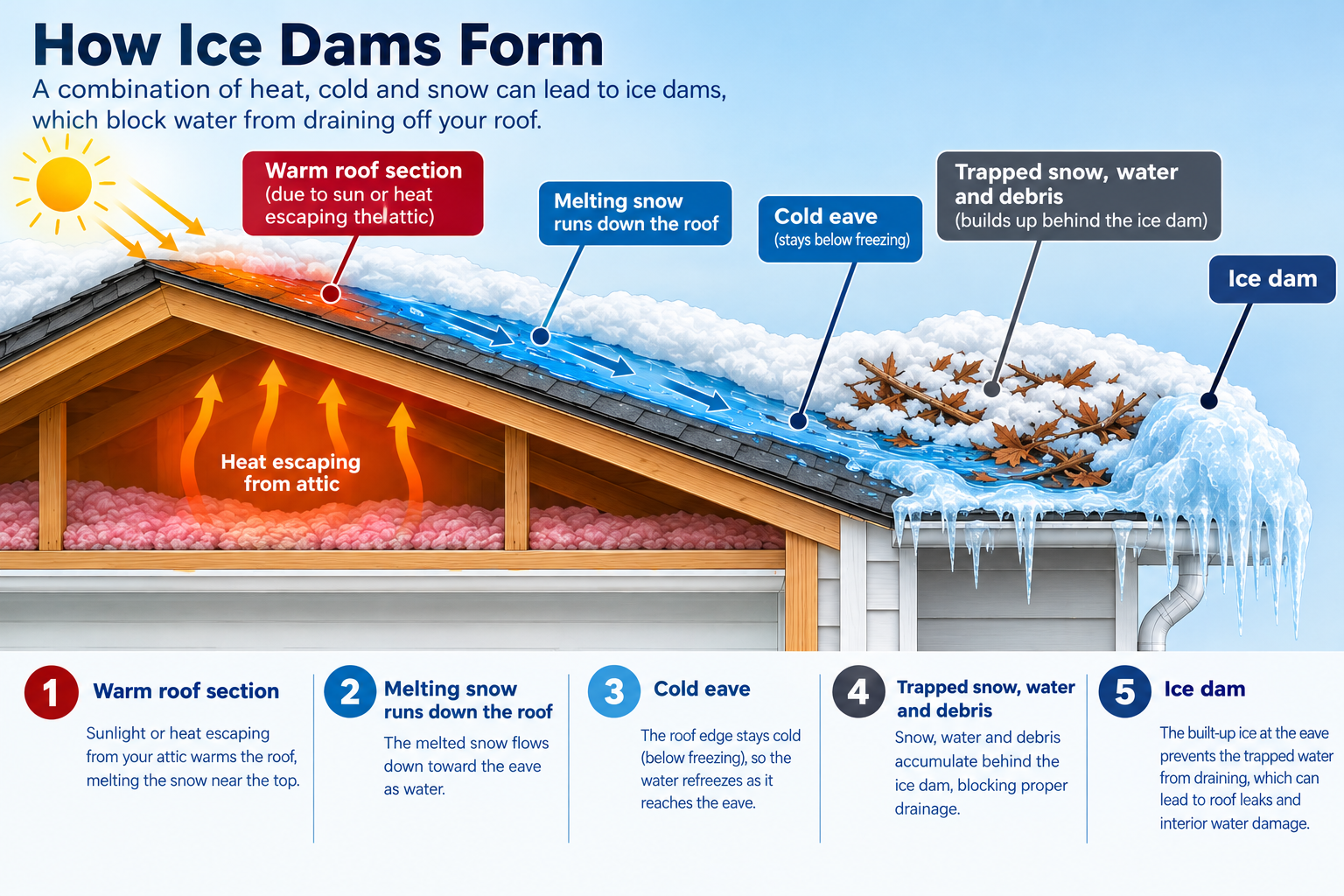
An ice dam is a dam formed at the edge of your roofline due to melting snow refreezing as it comes into contact with metal fixtures, like gutters and metal seams. Snow may heat up due to fluctuating temperatures, sun rays, or heat escaping the attic and naturally warming the roof. As the roof warms, the snow melts, and it refreezes at the cold eaves and edges.
Ice dams can cause dangerous damage, such as stacking heavy snow, inches of water, or clutter and storm debris. When snow, water, and debris can’t naturally fall from the roofline, the weight can put strain on the roof, water can back up under shingles, and pests can accumulate. You may notice roof leaks or water damage when an ice dam has formed.
Why Southern Massachusetts Homes Are Prone to Ice Dams
- Freeze-thaw cycles: Southern MA weather often swings above and below freezing temperatures within days, the perfect storm for ice dam formation.
- Older housing stock: Many homes in Southern MA, including New Bedford, Fall River, Fairhaven, and Taunton, have older construction, with little attic insulation and limited ventilation. The heat from the attic in these older homes is the perfect temperature to melt snow on rooftops.
- Roof designs that trap snow: Massachusetts homes tend to favor dormers, valleys, low-slope sections, and additions that create spots where snow collects and melts unevenly, creating the perfect environment for an ice dam.
- Coastal exposure: Coastal weather brings wet, heavy snow and nor’easters. With wind-driven snow and moisture in towns like Westport, Mattapoisett, Marion, and Little Compton, plus the humidity of a coastal climate, ice dams are easily formed.

Common Causes of Ice Dams
- Inadequate attic insulation
- Air leaks from recessed lights, attic hatches, chimneys, and plumbing or electrical penetrations
- Poor roof ventilation (blocked soffits, insufficient ridge venting)
- Clogged or undersized gutters
- Heavy snowfall followed by temperature swings
Warning Signs You Have an Ice Dam
- Icicles forming along the eaves, especially large ones
- Ice ridges along the roof edge
- Water stains on ceilings or walls near exterior walls
- Peeling paint, damp insulation, or musty odors in the attic
- Ice or water behind or beneath the siding
- Sagging or detached gutters
Damage Ice Dams Can Cause
Roof Leaks and Lifted Shingles
Because ice dams cause water to back up the roofline, water and debris will wedge under shingles, lifting them and exposing the underside of the roof. As the snow melts, water damage will occur, causing roof leaks because the water has nowhere to drain.
Wet Insulation
Roof leaks in the attic will damage insulation, causing it to lose its R-value and actually creating a cycle where more heat escapes, more snow melts, and more ice forms.
Mold and Mildew
Where water collects, mold and mildew form. Because Southern MA is a coastal area, the coastal humidity will actually cause faster mildew growth, especially if the water damage is left undetected going into warmer seasons.
Interior Water Damage
Roof leaks and dripping water can damage ceilings, walls, and floors very quickly, including peeling paint and wallpaper, water stains, and warping.
Gutter and Siding Damage
As ice dams form, they place pressure on gutters and edges of siding. With this additional pressure, gutters may back up, or warp, and siding may begin to separate or warp as debris starts to collect.
Structural Issues
Heavy snow, ice, and debris that cannot naturally drain from a roof will begin to gain weight over time, placing extreme pressure on roofing systems. This can weaken key points in a roofline or cause roof sagging, which may lead to a total failure and roof collapse.

How to Prevent Ice Dams (Long-Term Fixes)
Air Seal the Attic
The best way to prevent ice dams from forming is to air seal your attic. This process involves sealing off all gaps between your heated and cooled living space and the attic. As hot air rises, a sealed attic floor will prevent the hot air from collecting in the attic, where it will inevitably heat the underside of the roof and cause snow to melt.
Add or Upgrade Insulation
Combined with air sealing the attic, insulation helps prevent the collection of hot air under the roof. When insulation is properly installed to manufacturers’ guidelines, the underside of the roof will stay uniformly cold (or the same temperature), stopping the buildup of hot air at the peak of the roof. Through Mass Save, some homeowners may be eligible for home energy assessment and insulation incentives; visit masssave.com to learn more and check eligibility.
Improve Roof Ventilation
Work with Sam Karam & Sons roofing contractors to discuss soffit vents, ridge vents, and baffles. Having a proper ventilation system for hot air to escape an attic keeps the roof deck cold and uniformly the same temperature. This prevents heat buildup in irregular locations, which can help prevent the formation of ice dams.
Install an Ice and Water Barrier
A water and ice barrier at the edge of your roof and under shingles is an extra layer of protection against water damage. Products like CertainTeed WinterGuard protect eaves and valleys in case of water backup or water leaking under shingles. While most of these products have to be installed during a roof replacement, talk to your roofing contractor about your options; Sam Karam & Sons is proud to be a CertainTeed partner and can help homeowners explore their options.
Keep Gutters Clean and Functional
Debris and large chunks of snow and ice need somewhere to naturally dissipate, and clean gutters are your first defense. When water, ice, and snow have a natural route, your roof is less likely to back up with dams of heavy debris and ice. Explore Leaf Relief gutter guards, which will prevent gutters from clogging so ice and snow have somewhere to melt.
Consider Heat Cables as a Last Resort
If your home consistently backs up due to ice dams and you are tired of dealing with the damage every year, installing heat cables may be a solution. Heat cables are switched on manually when you notice an ice dam has formed or is starting to form, and they heat up to melt the ice and break up the dam. Heat cables will not prevent ice dams but help break them up when they have already formed.

How to Safely Deal With an Active Ice Dam
Do’s
If you notice an ice dam, there are a few safe ways to break it up to prevent snow and water damage on your roof. Use a roof rake from the ground and clear snow away from the lower 3-4 feet of the roof; you can purchase these at most home and garden centers near you. If possible, run a box fan in the attic to cool the roof deck.
Don’ts
It is not safe to climb onto an icy or snow-covered roof, so do not try to break up an ice dam from any portion of your roof. Chipping at ice with a hammer or an axe can damage parts of your roof, leading to roof leaks or additional problems, so only use approved tools, like a roof rake. While a pressure washer may have the force to break up an ice dam, it can actually push water up shingles or remove shingles, increasing the water damage. And never use rock salt on your roof, which actually damages the shingles and metal, leading to the need for roof repairs.
Safety Tip! Never climb onto a snow-covered or icy roof. While you may think that standing on a lower portion of the roof to reach a higher portion is safe, or that your roof isn’t that steep, icy roofs can be extremely dangerous. Falling off a roof can lead to injury or death. It is better to let an ice dam exist and call a roofer than to risk a serious fall.
When to Call a Professional Roofer
Worried an ice dam has already caused issues? Look for these signs it’s time to call a roofer. Sam Karam & Sons experienced contractors will inspect your roof, attic, gutters, and insulation to advise on the best ice dam prevention methods for your home. In extreme cases, a roof replacement may be the best approach. Check out the average cost of a roof replacement in MA to get an idea of estimates.
- You notice water leaks or water entering your home
- There are large or recurring ice dams every winter
- You can see visible shingle damage, sagging, or ceiling stains
- You suspect ventilation or insulation problems

Frequently Asked Questions
What causes ice dams on roofs?
Ice dams form on roofs due to melting snow from either fluctuating temperatures or improperly ventilated attics; the snow melts down the roof and refreezes at the eaves, where the material is cooler and metal fixtures introduce cold temperatures.
Do ice dams always cause leaks?
Ice dams do not always cause leaks but they greatly increase the risk of roof damage, including water leaks, shingle damage, and more. Ice dams should not be ignored and you should not wait for a leak to break up an ice dam.
Can ice dams damage my gutters or siding?
Yes, because ice dams stop debris and snow from naturally melting and flowing off of the roof, they collect an extreme amount of weight around the vulnerable edges of your roof. This weight can dent or warp gutters and siding, even causing them to separate from the home.
How much does ice dam removal cost in Massachusetts?
Ice dam removal costs vary based on the severity of the damage, the pitch and size of the roof, and several other factors. Sam Karam & Sons can provide a quote to help you plan for your winter maintenance season. It is always better to pay for ice dam removal vs roof repairs or replacements.
Is it okay to remove an ice dam myself?
If you use proper safety procedures and equipment, you can remove an ice dam yourself. Invest in a snow rake to remove ice dams safely from the ground. You can also purchase gutter guards before the season to help avoid gutter clogs. For extreme weather conditions, heater cables may be the best solution.
Will a new roof prevent ice dams?
A new roof will not prevent ice dams unless precautionary installations have been requested. Sam Karam & Sons can discuss additional roofing features, like dam and ice shields, gutter guards, and more, which can help prevent ice dams from forming.
When is ice dam season in southeastern Massachusetts?
Ice dam season is normally in January and February, when MA sees the most snowfall. However, early and late winter can see the formation of ice dams due to extreme weather fluctuations. Once there are freezing temperatures, keep an eye on your roof for ice dam formation.
Protect Your Home This Winter With Sam Karam & Sons
Sam Karam & Sons has 45+ years of experience helping homeowners in Southern MA manage ice dams and winter weather. We can advise on repairs, replacements, and prevention methods based on your roof design and home style. We proudly serve dozens of cities throughout Southern MA, so contact us today for a free estimate.
Call Us: (855) 941-5933